
- Accredited Online Program
Become a Certified Pharmacy Technician in as Little as 6 Months
Flexible. Online. Career-focused. Veteran-friendly. Start your journey in healthcare with Lakewood University today.
- ASHP Accredited Program
- 100% Online
- Veteran-Friendly
- Since 1998





Ready for a Healthcare Career Without Years of School?
Many adults are looking for something more stable. A career that offers steady demand, meaningful work, and long-term opportunity. Healthcare continues to grow nationwide, and pharmacy technicians play a vital role in supporting patients and pharmacists every day. If you are looking for a practical path into the healthcare field, this could be your next step.
Traditional college programs can take years to complete and often require significant financial investment before you ever enter the workforce. Not everyone has the time, flexibility, or desire to commit to a multi-year degree just to begin building a career. You deserve an option that respects your time and your goals.
Lakewood University’s Pharmacy Technician Certificate is designed for working adults who need flexibility and affordability without sacrificing quality. Our online format allows you to study around your schedule while preparing for certification and employment in a high-demand field. It’s a focused, career-driven pathway built for real life.
Lakewood University’s Pharmacy Technician Certificate prepares students for certification and employment in a flexible, online format designed for working adults.
Why Choose Lakewood?
Everything you need to succeed in your new career path.

Career-Ready Training
Practical skills you can use immediately in the field.

PTCB Certification Prep
Comprehensive prep for the Pharmacy Technician Certification Board exam.

Flexible Online Format
Learn anytime, anywhere that fits your schedule.

Designed for Adults
Support systems built for students balancing life and work.

Veteran Benefits
We proudly accept GI Bill® and other veteran education benefits.

Payment Plans
Affordable options to make your education stress-free.
Pharmacy Technician Career Outlook
The healthcare industry is growing rapidly, and pharmacy technicians are at the heart of patient care. With new medications and an aging population, the demand for skilled technicians is higher than ever.
Whether you prefer a retail pharmacy, a hospital setting, or long-term care facilities, your skills will be in high demand across the nation.
- According to the Bureau of Labor Statistics (BLS), employment is projected to grow through 2034.
Job Growth
6%
2024–2034
Yearly Openings
~49K
Annual avg
Median Salary
$43,460
BLS 2024
Settings
Diverse
Retail & Hospital
Program Snapshot
Quick facts you need to know about the program.

Duration
16 Weeks

Format
Online + Internship

Tuition
$12,775

Next Start
Monday

Eligibility
Certification Prep

Accreditation
ASHP Accredited

Work Hours
120-hour Internship

Aid
Financial Options
Get the Pharmacy Technician Program Guide
Enter your details below and we’ll send everything you need to know about the program.
- Your information is secure and will never be shared.

Gold Standard in Pharmacy Education
ASHP (American Society of Health-System Pharmacists) accreditation is the industry benchmark. It ensures our program meets rigorous national standards, making you more competitive in the job market.
- Trusted by major healthcare employers
- Ensures eligibility for national certification
- Maintains high instructional quality
- Recognized by State Boards of Pharmacy
ASHP Accredited Program
Don’t settle for unaccredited programs. Your career depends on receiving an education that employers recognize and respect. Our ASHP accreditation is your guarantee of quality.
RECOGNIZED NATIONALLY
Lakewood University was recently featured on CBS for its work in providing accessible, career-driven education to working adults and veterans. National recognition reinforces our commitment to delivering accredited programs designed to prepare students for real-world success.
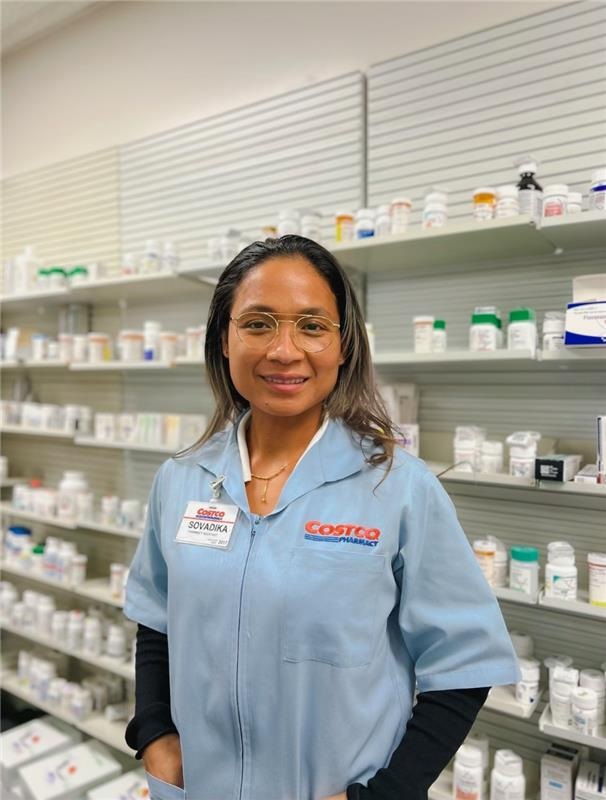

"The flexibility of the online program allowed me to continue working while I studied. Lakewood fully prepared me for the PTCB exam, and I landed my first pharmacy job within weeks of graduating!"
Sovadika Chea
Certified Pharmacy Technician
What You’ll Learn
Our curriculum is built around real-world skills. Each module is designed to move you closer to certification and professional mastery.
Lakewood University’s Pharmacy Technician program prepares students to aid licensed pharmacists prepare medications, provide customer service, and perform administrative duties within a pharmacy setting.
The program outlines the proper communication skills necessary for pharmacy technicians which include telecommunication skills and interpersonal communication skills.
The course will focus on the accuracy necessary to ensure that information on prescriptions is complete and accurate.
Students in this program will gain the knowledge and skills to qualify them for entry-level positions in pharmacies as well as to be prepared for the National Certification Exam.
Program Objectives
- Interpret physician orders and prescriptions for accuracy
- Explain the role a pharmacy technician plays in the compounding of medications
- Define medical and pharmaceutical terms and common abbreviations
- Describe the role that the pharmacy technician plays in the pharmacy
- Perform basic pharmaceutical calculations
- Explain the differences between brand and generic medications
- Recognize the role that the pharmacy plays in preventative services such as immunizations
- Identify the individual state requirements for a pharmacy technician
- Demonstrate the basic skills needed to effectively prepare for an interview

Week 1: Pharmacy Foundations
You will learn the definition of pharmacology.
In this section, you will also learn why the pharmacy technician needs to understand and learn about pharmacology.
In the drug actions section, you will develop an understanding of the role that receptors play in the body.
You will get an overview of the similarities and differences between agonists and antagonists in terms of pharmacology.
You will learn the concepts associated with pharmacodynamics: messengers, receptors, and mechanisms of drug action.
You will also learn about the four processes of pharmacokinetics: absorption, distribution, metabolism, and excretion.
Week 2: Medications and Pharmacy Law & Regulations
You will learn about study strategies, such as spacing, interleaving, testing, and the contiguity principle.
You will discover how to eliminate distractions and adopt a growth mindset to improve your studying.
In the pharmacy-specific study aids section, you will develop an awareness of how learning medications by drug class can assist with efficient pharmacology learning.
You will learn common generic drug name endings and their associated drug classes.
You will also learn about mnemonic devices useful for pharmacy.
Week 3: Prescription Orders, Medication Safety, and the Integumentary System
You will learn about the components of a prescription and commonly used prescription abbreviations.
You will also learn about the “rights” of correct drug administration. You will discover common dosage forms, as well as the routes of administration and dosage forms, in the corresponding section of this chapter.
Module 4: The Musculoskeletal System and Drug Therapy
You will learn about the anatomy and physiology of the musculoskeletal system in the first two sections of this chapter.
In the osteoarthritis and drug treatments section, you will learn about drug classes used to treat osteoarthritis, including their usage, side effects, contraindications, and cautions or considerations.
You will also discover the antidote for acetaminophen overdose.
As you progress through that section, you will develop an awareness of the similarities and differences between traditional NSAIDs and COX-2 inhibitors.
In the rheumatoid arthritis and drug treatments section, you will get an overview of agents commonly used to treat rheumatoid arthritis, including their usage, side effects, contraindications, and cautions or considerations.
Week 5: The Nervous System and Drug Therapy, Drug Administration and Dosage Formulations
You will learn about the divisions of the nervous system and its functions.
You will get an overview of the classes of drug therapy used to treat conditions affecting the nervous system.
In the section called seizure disorders and drug therapy, you will learn about the physiologic processes that occur in epilepsy.
In addition, you will develop an understanding of how seizures are classified and the goals of antiseizure therapy.
You will also learn about the specific drugs used in the treatment of different classes of seizures.
Week 6: Mental Health, Sensory System Drug Therapy, and Pharmacy Measurements / Calculations
You will develop an understanding of the differences between antidepressants, antipsychotics, and antianxiety agents.
In the depression, mood disorders, and drug treatment section, you will learn about antidepressant classes, their uses, and their side effects. In the bipolar disorder and drug treatments section, you will discover the mechanism of lithium and other drugs used to treat bipolar disorders.
Throughout this lesson, you will learn about the anatomy and physiology of the eyes and ears.
You will learn about the classes of ophthalmic drugs and the conditions they treat. In the sections on glaucoma, chronic dry eye, and conjunctivitis, you will get an overview of the classes of ophthalmic drugs used to treat these conditions.
In the sections on chronic dry eye and conjunctivitis, you will develop an understanding of how to properly use eye drops and ointments.
In the otitis media and external drug treatments section, you will discover the classes of otic agents used to treat these conditions.
In addition, you will learn how to properly use eardrops.
Week 7 : The Cardiovascular System and Community Pharmacy Dispensing
You will learn about the anatomy and physiology of the cardiovascular system.
In the hypertension and drug treatments section, you will learn about the drug classes used to treat hypertension.
In addition, you will discover the multiple therapeutic indications for these drugs.
In the cardiac arrhythmias and drug treatments section, you will get an overview of agents commonly used to treat cardiac arrhythmias.
In the angina, myocardial infarction, and corresponding drug treatments section of this chapter, you will compare and contrast the drug classes used to treat angina and myocardial infarction.
You will then get an overview of these agents and their descriptions.
Week 8 : The Respiratory System and Gastrointestinal System Drug Therapy
You will learn about the anatomy of the respiratory system.
Throughout this lesson, you will learn about the differences between the main pulmonary diseases.
In the asthma and drug treatments section, you will develop an understanding of the pathophysiology and treatment of asthma.
You will also get an overview of the pathophysiology and treatment of chronic obstructive pulmonary disease.
Also, you will learn about the anatomy and physiology of the gastrointestinal system.
Throughout this lesson, you will develop an understanding of drug treatments for GI diseases.
You will learn about gastroesophageal reflux disease and its complications.
In the diarrhea and drug treatment section, you will get an overview of antidiarrheal agents and their mechanisms of action.
In the constipation and flatulence and drug treatments section, you will learn about the role of fiber in the digestive process.
You will also learn about laxatives and their mechanisms of action in that section.
Week 9 : The Endocrine System and the Business of Community Pharmacies
You will learn about the physiologic processes of the endocrine system.
You will also learn about hormones and how they regulate the body.
In the thyroid disorders and drug treatments section, you will develop an awareness of the treatments for disorders of the thyroid.
As you progress through the adrenal glands and drug treatments section, you will discover commonly used corticosteroids.
In the diabetes and drug treatments section of this chapter, you will learn about diabetes, along with the proper treatment and care of patients with diabetes.
You will also learn about the classes of drugs used to treat diabetes.
In addition, you will develop an understanding of how the medications used to treat diabetes work.
Week 10 : Reproductive System Drug Therapy and Nonsterile Compounding
You will learn about the physiologic processes of the endocrine system.
You will also learn about hormones and how they regulate the body.
In the thyroid disorders and drug treatments section, you will develop an awareness of the treatments for disorders of the thyroid.
As you progress through the adrenal glands and drug treatments section, you will discover commonly used corticosteroids.
In the diabetes and drug treatments section of this chapter, you will learn about diabetes, along with the proper treatment and care of patients with diabetes.
You will also learn about the classes of drugs used to treat diabetes.
In addition, you will develop an understanding of how the medications used to treat diabetes work.
Week 11 : The Immune System, Infections, and Hospital Pharmacy Dispensing
You will learn about the anatomy and physiology of the renal system.
In the renal function and pharmacokinetics section, you will develop an awareness of renal system dysfunction and ways of assessing renal function.
In the section titled urinary tract infection and drug treatments, you will learn about which antibiotics are used to treat urinary tract infections.
You will also learn the indication, dosage and administration, side effects, contraindications, and cautions and considerations of phenazopyridine.
In the urinary incontinence and drug treatments section, you will develop an understanding of the agents used to treat urinary incontinence, including their dosage and administration, side effects, contraindications, and cautions and considerations.
In the first section of this chapter, you will learn about the major organs and cells involved in the immune response.
You will develop an awareness of the differences between the innate and adaptive immune systems.
You will also learn the definitions of antigen and antibody.
Also, you will get an overview of the major types of antibiotics by drug class.
Throughout this lesson, you will discover which auxiliary labels to use when dispensing major types of antibiotics and antifungals.
Week 12 : Viral Infections, Aseptic Technique, and Cleanroom Facilities
You will learn about the differences between bacteria, fungi, and viruses, and why the drugs used to treat them must have different mechanisms of action in the sections called viruses and viral infections and antiviral agents.
In the antiviral agents section and the HIV/AIDS and antiretroviral agents section, you will develop an understanding of the differences between antiviral and antiretroviral drugs in terms of their indications, therapeutic effects, side effects, dosages, and administration.
You will also develop an awareness of how to use antiviral and antiretroviral terminology correctly in written and oral communication.
Week 13 : Viral Infections, Aseptic Technique, and Cleanroom Facilities
You will learn about sources of pain and the difference between acute and chronic pain.
In the opioids and pain management section, you will develop an understanding of the role of opioid analgesics in pain management and the primary hazards of their use.
You will also develop an awareness of the role of nonopioid analgesics in pain management.
In the section on opioid use disorder and treatments, you will learn the signs of opioid use disorder and the drugs used to treat the disorder.
Week 14 : Nutrition, Fluid Therapy, and Medication Safety
You will learn about how the body uses vitamins and the common signs and symptoms of vitamin deficiency.
In the fluids, electrolytes, and acid-base balance section, you will discover how fluids and electrolytes are used in the body.
You will also learn how electrolyte replacement products are used. In the obesity and drug therapy section, you will develop an understanding of the definition of obesity.
In addition, you will learn about prescription treatments for obesity.
In the malnutrition and drug therapy section, you will develop an awareness of the similarities and differences between enteral and parenteral nutrition, including their purposes, ingredients, stability, and complications.
Week 15 : Cancer Drug Therapy and Professionalism
You will learn about the basic physiology of cancer and the growth of tumor cells.
Throughout this lesson, you will learn about traditional chemotherapy drugs, hormonal anticancer therapies, and targeted anticancer drug therapies.
As you progress through this chapter, you will get an overview of the generic names, brand names, indications, dosage ranges, side effects, and considerations associated with drugs commonly used to treat cancer.
In the immunotherapy section of this chapter, you will discover when immunotherapy is justified as a viable treatment option.
In the handling hazardous agents section, you will develop an understanding of strategies that help prevent chemotherapy-related errors.
Week 16 : Course Review and Externship Preparation
This week, you will prepare for and take your final exam for the didactic and simulation phase of the program.
The next step is to apply what you have learned by working in the real world during your externship.
130 Hour Internship in a Pharmacy
The 130-hour internship is a required part of the program and must be completed in order to graduate.
This hands-on experience gives students the opportunity to apply the knowledge and skills learned in class in a real-world pharmacy setting.
During the internship, students gain practical experience, build confidence, and strengthen their readiness for entry-level employment in the field.
You’re Not Doing This Alone
We provide the structure and support you need to cross the finish line.

Instructor Support
Expert faculty available for questions and guidance.

Success Coach
Dedicated coaches to help you stay on track and motivated.

Online Student Portal
24/7 access to all course materials and resources.

Career Guidance
Resume building, interview prep, and job search assistance.

Veteran Services
Specialized support for our military and veteran community.
Payment Options
Flexible monthly plans to fit any budget.
Frequently Asked Questions
Is this program accredited?
Yes. Lakewood University is accredited by the Distance Education Accrediting Commission (DEAC), and the Pharmacy Technician Certificate program is ASHP accredited. Accreditation means the program meets nationally recognized standards for quality, curriculum, and student preparation. Choosing an accredited program helps protect your time and investment.
Does this prepare me for certification?
Yes. The Pharmacy Technician Certificate is designed to prepare graduates to sit for national certification examinations, including the Pharmacy Technician Certification Exam (PTCE). The curriculum aligns with industry standards and includes focused preparation to help students feel confident and ready for certification.
Can I use VA benefits?
Eligible students may use approved VA education benefits for this program. Lakewood University is committed to supporting veterans and military families through the enrollment process. Our admissions team can help you determine your eligibility and guide you step by step.
Are payment plans available?
Yes. We offer flexible payment options to make the program more accessible. In addition to approved financing partners, students may choose structured payment plans based on eligibility. Our admissions team can review available options and help you select the best fit for your situation.
How long does it take?
The program can be completed in as little as six months, depending on your pace and schedule. Because the format is online and flexible, many students are able to complete their training while continuing to work or manage other responsibilities.
Will I be able to complete it while working?
The program is delivered in a flexible online format designed to accommodate working adults. While you can complete coursework around your weekly schedule, there are structured weekly deadlines to help you stay on track. All coursework must be completed by your assigned program end date, ensuring steady progress toward graduation and certification readiness.
What happens after graduation?
Before completing the program, all students complete a required 120-hour internship in a pharmacy setting, gaining real-world experience in a professional environment. Lakewood University works with students to help secure internship placements so you can apply what you’ve learned in an active healthcare setting.
Upon successful program completion, graduates are prepared to sit for national certification, and Lakewood University covers the cost of your first certification exam attempt. After certification, you may pursue employment opportunities in retail pharmacies, hospitals, long-term care facilities, and other healthcare settings.
Our support does not end at graduation. Students receive lifetime access to career services, including resume guidance, job search support, and professional resources to help you continue growing in your career.
Start Your Career in Healthcare Today
Join thousands of successful graduates who have transformed their lives with Lakewood University. Your new career is just 6 months away.
© 2026 All Rights Reserved, Lakewood University.
GI Bill® is a registered trademark of the U.S. Department of Veterans Affairs. VA education benefits eligibility varies by individual and program. Lakewood University does not guarantee benefit approval.